Mag-iwan ng Mensahe
Kung interesado ka sa aming mga produkto at gusto mong malaman ang higit pang mga detalye, mangyaring mag-iwan ng mensahe dito, sasagutin ka namin sa lalong madaling panahon.

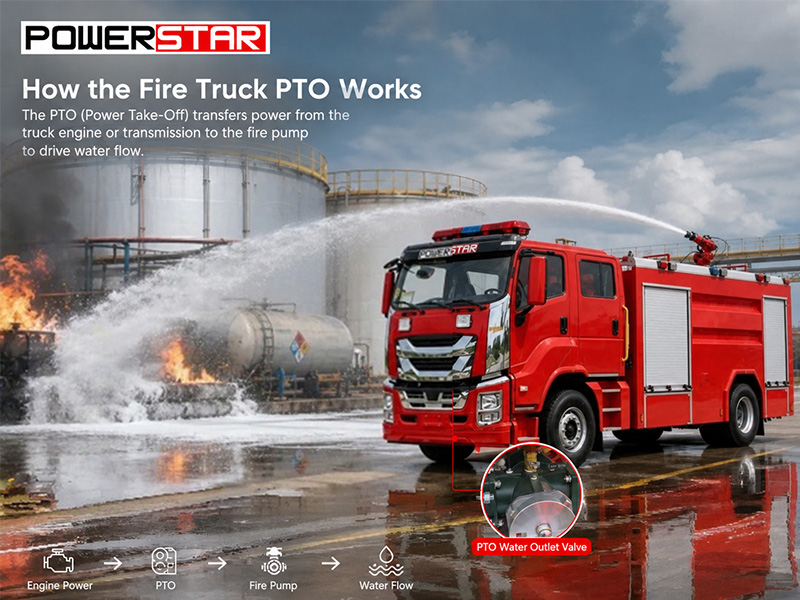
Ang PTO (Power Take-Off) ng trak ng bumbero ay isang aparatong nagpapadala ng kapangyarihan na naglilipat ng lakas ng makina papunta sa bomba ng tubig ng bumbero. Kapag pinagana ng bumbero ang PTO, ang mekanikal na lakas mula sa makina ay ipinapadala sa pamamagitan ng transmisyon at PTO papunta sa bomba ng bumbero — ito ang pangunahing prinsipyo ng paggana kung paano ang isang trak panlaban sa sunog na sistema ng PTO ay gumagana — na nagbibigay-daan sa bomba na maghatid ng tubig o bula na may mataas na presyon at mataas na daloy nang hindi nangangailangan ng hiwalay na pantulong na makina.
Ang mga modernong trak ng bumbero ay karaniwang gumagamit ng PTO na nakakabit sa gilid o mga sistema ng PTO na buong lakas. Nagbibigay ang mga ito ng matatag na output ng kapangyarihan, maginhawang operasyon, at mababang gastos sa pagpapanatili, kaya mahalaga silang bahagi ng sistema ng pamatay-sunog ng trak ng bumbero.
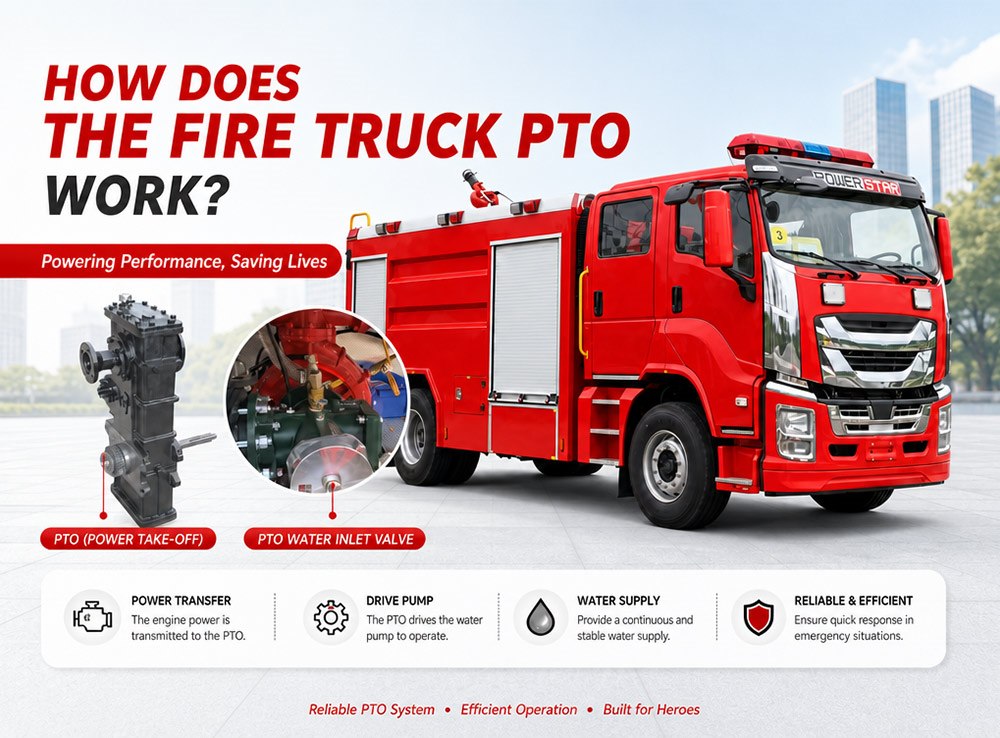
Ang PTO (Power Take-Off) ay isang mahalagang bahagi ng sistema ng kapangyarihan ng trak ng bumbero. Ito ay isang aparatong nagpapadala ng lakas gamit ang mga gear na nakakabit sa pagitan ng makina at transmisyon, na idinisenyo upang "ilihis" ang bahagi ng mekanikal na lakas mula sa makina o transmisyon ng sasakyan papunta sa bomba ng bumbero o iba pang pantulong na kagamitan, nang hindi naaapektuhan ang normal na kakayahang bumiyahe ng sasakyan.
Ang makina ng trak ng bumbero ay orihinal na responsable lamang sa pagpapaandar ng mga gulong. Gayunpaman, kapag dumating ang trak ng bumbero sa lugar ng sunog, hindi na kailangan ng mga gulong ng kapangyarihan, habang ang bomba ng bumbero ay nangangailangan ng kapangyarihan upang sumipsip at magbigay ng presyon sa tubig. Ang PTO ang aparatong nagsasagawa ng "paglipat ng kapangyarihan" na ito.
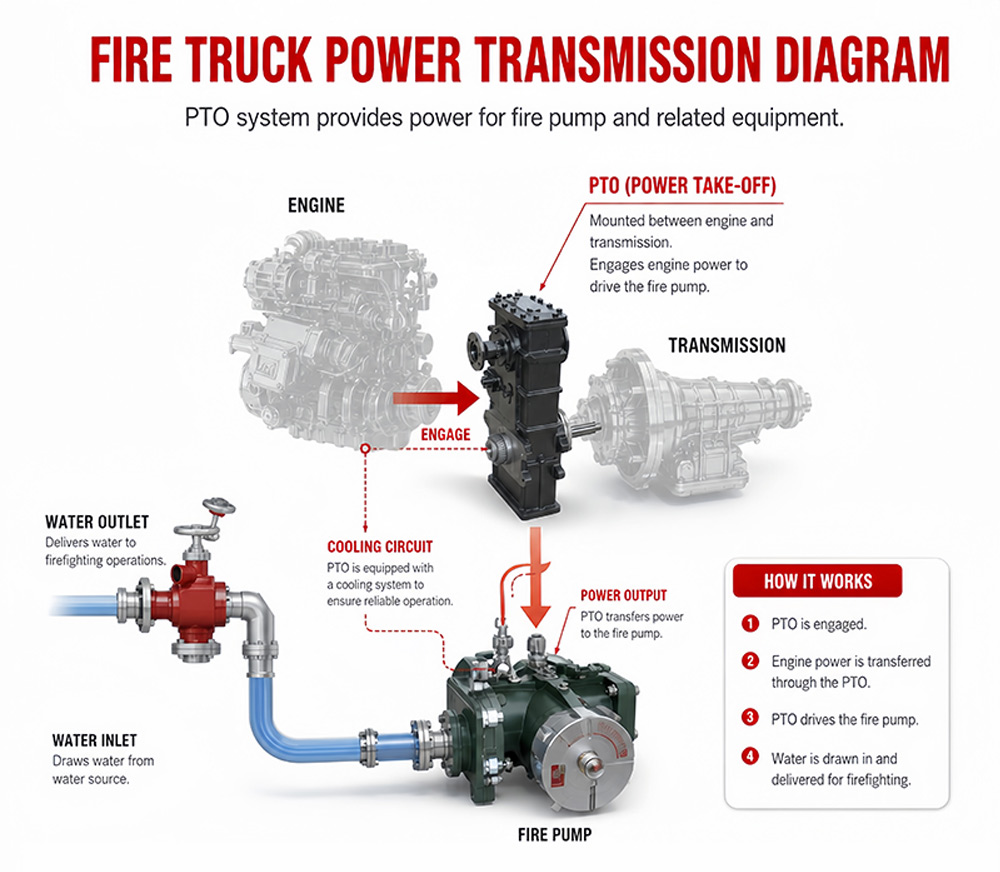
Ang Power Take-Off (PTO) ay literal na nangangahulugang "aparatong naglalabas ng kapangyarihan."
Sa trak ng bumbero, tumutukoy ito sa pagkuha ng umiikot na lakas mula sa flywheel ng makina o mga gear ng transmisyon sa pamamagitan ng pagkakabit ng mga gear, at paghahatid nito sa bomba ng bumbero o iba pang pantulong na kagamitan.
Inilalarawan ng pangalan nito ang tungkulin nito:
Makina = Pinagmumulan ng kapangyarihan
PTO = Tagapamahagi ng kapangyarihan
Bomba ng bumbero = Bahagi na kumokonsumo ng kapangyarihan
Samakatuwid, ang PTO ang tulay na nag-uugnay sa "pinagmumulan ng kapangyarihan" at sa "sistema ng pamatay-sunog."
Ang pangunahing dahilan kung bakit kailangang may PTO ang mga trak ng bumbero ay dahil ang mga operasyon sa pag-apula ng sunog ay nangangailangan ng tuloy-tuloy, matatag, at mataas na lakas na output na hindi maaaring umasa sa kondisyon ng pagmamaneho ng sasakyan.
Mga pangunahing dahilan:
1. Nagbibigay ng tuloy-tuloy na kapangyarihan para sa pamatay-sunog
Kailangang gumana ng bomba ng bumbero nang matagal habang nagsasagawa ng operasyon sa pag-apula ng sunog. Pinahihintulutan ng PTO ang makina na patuloy na paandarin ang bomba ng bumbero habang naka-idle o nasa nakatakdang RPM, na tinitiyak ang matatag na presyon at daloy ng tubig.
2. Pinapahusay ang kahusayan ng paggamit ng kapangyarihan
Kung walang PTO, kakailanganin ang hiwalay na pantulong na makina upang paandarin ang bomba ng bumbero, na magpapataas sa:
Gastos
Kumplikasyon ng pagpapanatili
Panganib ng pagkasira
Paggamit ng espasyo
Direktang ginagamit ng PTO ang lakas ng makina ng sasakyan, na nagpapahusay sa kabuuang kahusayan.
3. Sinusuportahan ang maraming sistema ng pamatay-sunog
Ang mga modernong industriyal na trak ng bumbero ay maaaring magkaroon hindi lamang ng mga bomba ng tubig kundi pati ng:
Mga sistema ng bula
Mga sistema ng tuyong pulbos
Mga sistema ng tubig na may mataas na presyon
Mga monitor ng sunog na kontrolado nang malayuan
Kung walang PTO, mayroon lamang dalawang solusyon:
Mag-install ng hiwalay na makina upang paandarin ang bomba → nagpapataas ng bigat, gastos, mga punto ng pagpapanatili, at kumokonsumo ng espasyo
Panatilihing permanenteng nakakonekta ang bomba sa transmisyon → hihinto ang bomba kapag huminto ang sasakyan, hindi makapagbomba ng tubig sa lugar ng operasyon
Nilulutas ng PTO ang parehong problema nang sabay:
| Mode | Katayuan ng PTO | Pinupuntahang pinagmumulan ng kuryente | Resulta |
| Mode ng pagmamaneho | Hindi nakakabit | Lahat papunta sa mga gulong | Normal na pagmamaneho |
| Mode ng pamatay-sunog | Nakakabit | Lahat papunta sa bomba ng pamatay-sunog | Pagbomba habang nakahinto |
Ang PTO ay mahalagang isang "sistema ng pamamahagi at pagbabago ng kuryente" na nagko-convert ng lakas sa pagmamaneho ng sasakyan tungo sa lakas para sa mga operasyon ng pamatay-sunog.
Mula sa pananaw ng inhinyeriya, ang kumpletong daloy ng kuryente ay:
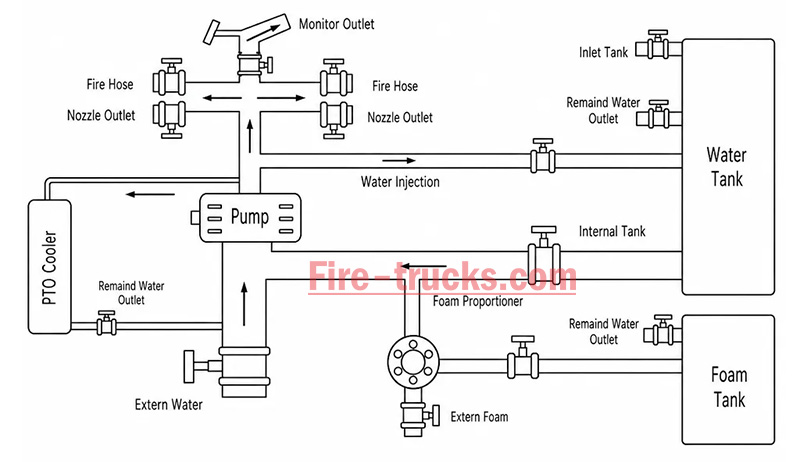
Makina → Transmisyon → PTO → Baras ng transmisyon → Bomba ng pamatay-sunog → Monitor ng apoy/Sistema ng hose
Ang prinsipyo ng paggana ng PTO ay maaaring ibuod sa tatlong pangunahing yugto: pagkuha ng kuryente, pagkakabit, at transmisyon.
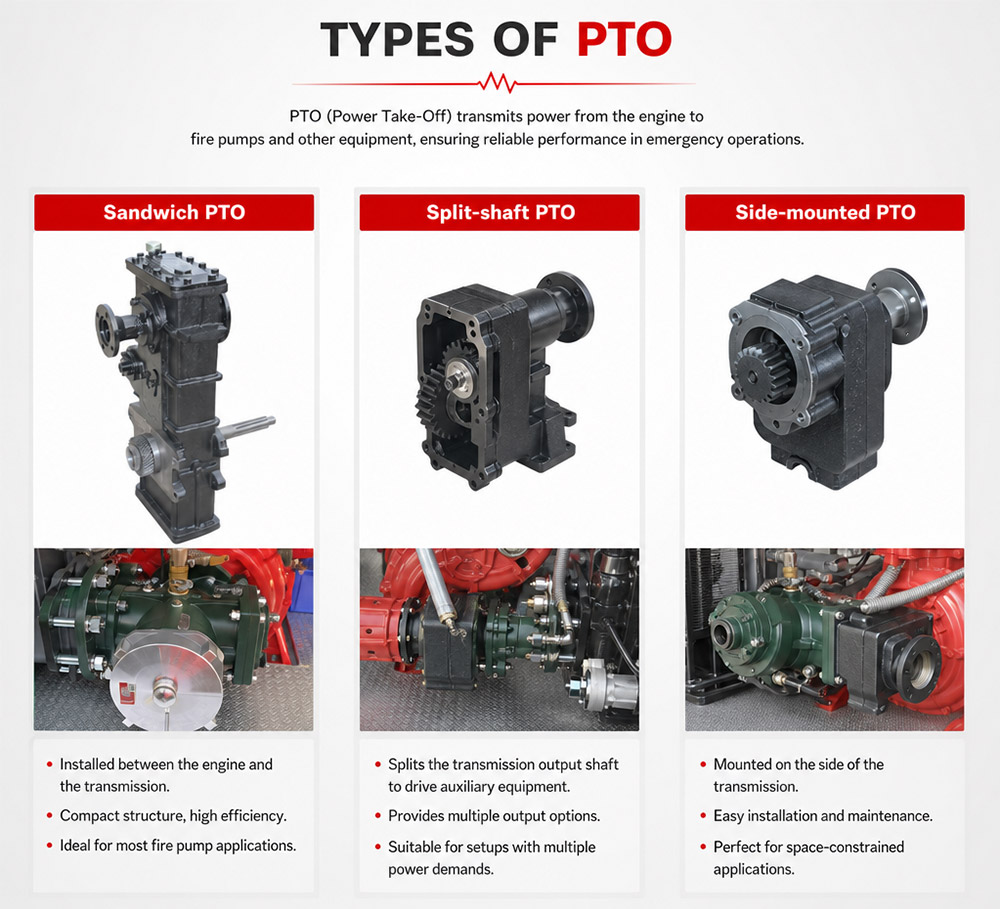
Kumukuha ng kuryente ang PTO mula sa makina. Depende sa posisyon ng pagkakabit, nag-iiba ang paraan ng pagkuha ng kuryente:
| Uri ng PTO | Posisyon ng pagkakabit | Pinagmumulan ng kuryente | Mga katangian |
| PTO na nakakabit sa gilid | Gilid ng transmisyon | Kambiyo ng countershaft ng transmisyon | Simpleng estruktura, mas mababang lakas (≤50% ng lakas ng makina) |
| Sandwich PTO | Sa pagitan ng makina at transmisyon | Flywheel ng makina | Buong output ng lakas, pangunahing konfigurasyon |
| PTO na may nahahating baras | Sa pagitan ng transmisyon at drive shaft | Output shaft ng transmisyon | Mataas na lakas, nagbibigay-daan sa pagbomba habang umaandar |
Pagkatapos pindutin ng drayber ang PTO switch sa taksi, umaandar ang mekanismo ng pagkakabit:
| Paraan ng Pagkakabit | Prinsipyo ng Paggana | Karaniwang Ginagamit |
| Kontrol ng electric solenoid | Ina-activate ng signal na elektrikal ang solenoid, na nagtutulak sa shift fork | Pangunahing ginagamit sa mga makabagong trak ng bumbero |
| Kontrol na niyumatik | Tinutulak ng nakaipit na hangin ang piston, na nagpapagana sa fork | Malalaking trak ng bumbero |
| Manwal na kable | Direktang hinihila ng mekanikal na kable ang fork | Mas lumang mga sasakyan |
Pagkakasunod-sunod ng operasyon:
Pindutin ang PTO switch → Pinapagana ng solenoid/silindro ang mekanismo → Itinutulak ng shift fork ang sliding gear → Kumakabit sa flywheel o gear ng transmisyon → Nakakonekta ang kapangyarihan
Pagkatapos magsimulang umikot ang PTO output shaft, ipinapadala ang kapangyarihan sa pamamagitan ng drive shaft papunta sa fire pump:
Umiikot ang PTO output shaft → Drive shaft → Input shaft ng fire pump → Umiikot ang pump impeller → Naiipit at nailalabas ang tubig sa ilalim ng presyon
| Hakbang | Aksyon | Resulta |
|---|---|---|
| Hakbang 1 | Umiandar ang makina, naka-idle o umaandar ang sasakyan | Gumagana ang makina, hindi nakakabit ang PTO |
| Hakbang 2 | Dumarating sa lugar ng insidente, pinipindot ng drayber ang PTO switch | Hindi na ginagamit ang lakas para sa pagmamaneho (sa ilang modelo), aktibo ang PTO gear |
| Hakbang 3 | Itinatatag ng PTO ang koneksyon ng kapangyarihan sa transmisyon | Inililihis ang kapangyarihan ng transmisyon papunta sa PTO output shaft |
| Hakbang 4 | Ipinapadala ng drive shaft ang kapangyarihan sa fire pump | Nagsisimulang tumanggap ang fire pump ng tuloy-tuloy na mekanikal na kapangyarihan |
| Hakbang 5 | Umiikot ang impeller ng fire pump sa mataas na bilis | Pagsipsip → Pagbibigay ng presyon → Paghatid sa mga linya ng labasan → Pagsugpo ng sunog |
| Hakbang 6 | Umaabot ang sistema sa balanseng RPM | Matatag na output, naaayos na presyon, daloy, at padron ng pag-spray |
Ang PTO system ng fire truck ay isang kumpletong kadena ng transmisyon ng kuryente, na may maraming bahagi na nagtutulungan upang ilipat ang kapangyarihan ng makina sa fire pump. Maaaring hatiin ang sistema sa anim na pangunahing bahagi
Ang makina ang pinagmumulan ng kapangyarihan ng PTO system at puso ng buong fire truck.
Tungkulin: Lumilikha ng hilaw na rotational na kapangyarihan, nagpapaandar sa flywheel o crankshaft.
Labas ng kapangyarihan: Karaniwan 300–600 HP (depende sa modelo at konfigurasyon ng chassis).
Ugnayan sa PTO: Humihigop ang PTO ng kapangyarihan mula sa flywheel o crankshaft ng makina — ito ang panimulang punto ng kapangyarihan.
Pangunahing katangian: Direktang naaapektuhan ng RPM ng makina ang bilis ng output ng PTO at kakayahan ng fire pump na maglabas ng tubig. Karaniwang nilagyan ang mga fire truck ng high-power diesel engines, na hindi lamang nagpapaandar sa sasakyan kundi nagbibigay din ng sapat na reserve ng kapangyarihan para sa fire pump. Pagkatapos ma-engage ang PTO, maaaring kontrolin ng operator ang pressure ng pump sa pamamagitan ng pag-adjust ng RPM ng makina.
Ang transmisyon ay responsable sa paghahatid ng kapangyarihan at pagtutugma ng bilis.
Tungkulin: Tumatanggap ng kapangyarihan mula sa makina at ina-adjust ang bilis at torque sa pamamagitan ng iba't ibang kombinasyon ng gear.
Ugnayan sa PTO: Humihigop ang side-mounted PTO ng kapangyarihan mula sa internal na gears ng transmisyon; ang sandwich PTO ay ini-install sa harap ng transmisyon.
Pangunahing katangian: Ang posisyon ng gear ng transmisyon ay hindi nakakaapekto sa bilis ng output ng PTO — ang PTO ay gumagana nang independente sa pagpili ng gear.
Dalawang posisyon ng power take-off:
Transmission side window take-off: PTO na naka-mount sa gilid ng transmisyon, humihigop ng kapangyarihan mula sa countershaft o intermediate shaft gears; karaniwan sa medium-duty fire trucks.
Transmission rear-end take-off (sandwich): PTO na ini-install sa pagitan ng makina at transmisyon, kumukuha ng kapangyarihan direkta mula sa flywheel, nagbibigay ng full power output.
Ang PTO ang puso ng buong sistema, responsable sa "pagkuha" ng kapangyarihan mula sa makina at paghahatid nito sa fire pump.
Tungkulin: Kinuha ang kapangyarihan mula sa makina o transmisyon at kinokonvert ito sa bilis at torque na angkop para sa fire pump.
Posisyon ng pag-install: Sa gilid ng transmisyon (side-mounted) o sa pagitan ng makina at transmisyon (sandwich).
Pangunahing katangian: Tinutukoy ang kahusayan ng transmisyon ng kapangyarihan, pagtutugma ng bilis, at kaginhawaan sa operasyon.
Ang drive shaft ay ang "tulay ng kapangyarihan" na nag-uugnay sa PTO at fire pump.
Tungkulin: Nagpapadala ng rotational na kapangyarihan mula sa output shaft ng PTO patungo sa input ng fire pump.
Estruktura:Karaniwang binubuo ng tubong metal na baras, mga unibersal na dugtungan, at mga spline na koneksyon.
Pangunahing katangian:Dapat na tumpak ang pagkaka-align upang maiwasan ang panginginig; nagbibigay-daan ang mga unibersal na dugtungan sa kompensasyon ng anggulo.
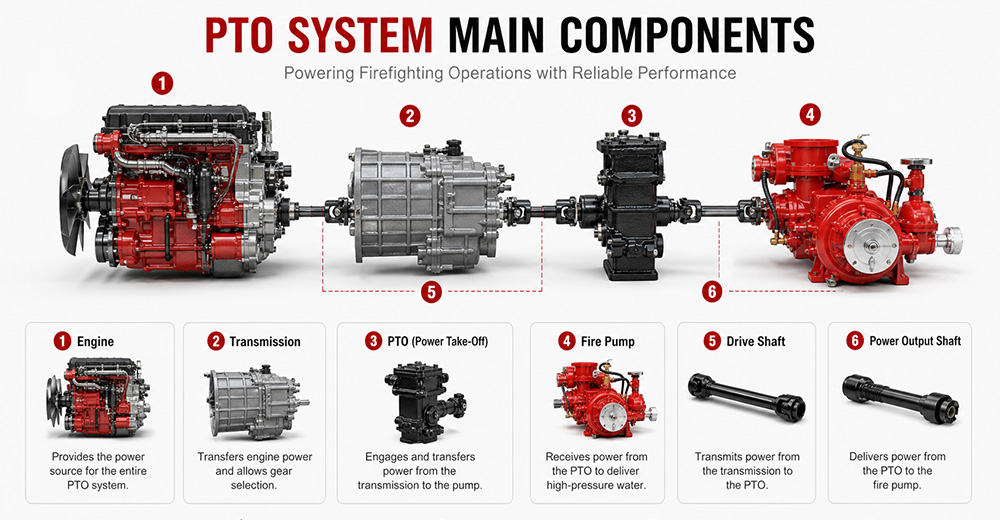
Ang bomba ng sunog ang huling karga ng sistema ng PTO, na responsable sa pagpapalit ng mekanikal na enerhiya tungo sa enerhiya ng presyon ng tubig.
Gampanin:Tumatanggap ng paikot na kapangyarihan mula sa PTO, pinaiikot ang impeller, kumukuha ng tubig, at inilalabas ito sa ilalim ng mataas na presyon.
Uri:Centrifugal na bomba (isang yugto, dalawang yugto, o maraming yugto).
Karaniwang daloy:20 L/s – 180 L/s (1,200 – 6,000 L/min).
Karaniwang presyon:1.0 – 2.5 MPa (10 – 25 bar).
Ang sistema ng kontrol ng PTO ang "sentro ng utos" sa pagitan ng drayber at sistema ng PTO, na responsable sa pagpasok, paglabas, proteksiyon sa kaligtasan, at pagpapakita ng katayuan.
Gampanin:Kinokontrol ang pagpasok at paglabas ng PTO, sinusubaybayan ang katayuan ng sistema, at nagbibigay ng proteksiyon sa kaligtasan.
Lokasyon ng pagpapatakbo:Loob ng kabina (pangunahing kontrol) at panel ng bomba (pantulong na kontrol).
Mga paraan ng pagkontrol:Manwal na kable, elektrikal na solenoid, niyumatik.
Mga partikular na gampanin ng kontrol:
(1) Kontrol sa Pagpasok ng PTO
Pinipindot ng operator ang switch ng PTO (elektrikal na solenoid/niyumatik) o hinihila ang pingga (manwal) sa kabina. Nagpapadala ang sistema ng kontrol ng senyas upang ipasok ang panloob na mga gear ng PTO sa pinagmumulan ng kapangyarihan. Pagkatapos makumpirmang matagumpay ang pagpasok, umiilaw ang ilaw na tagapagpahiwatig, na nagpapahintulot sa operator na taasan ang RPM ng makina.
(2) Kontrol sa Paglabas ng PTO
Pinipindot muli ng operator ang switch o ibinabalik ang pingga. Pinuputol ng sistema ng kontrol ang senyas, at naghihiwalay ang mga gear ng PTO. Pagkatapos makumpirmang nailabas na ito, namamatay ang ilaw na tagapagpahiwatig.
| Uri ng PTO | Posisyon ng Pagkakabit | Pinagmumulan ng Kapangyarihan | Lakas ng Labas | Karaniwang Gamit |
| Sandwich PTO | Sa pagitan ng makina at transmisyon | Flywheel ng makina | Buong lakas (≥90%) | Mga trak na may bomba ng sunog, mga trak na may hagdang panghimpapawid |
| PTO na split-shaft | Driveshaft sa gitna ng chassis | Output shaft ng transmisyon | Buong lakas | Malalaking vacuum truck, mga trak ng bumbero sa paliparan |
| PTO na nakakabit sa gilid | Gilid ng transmisyon | Mga gear ng transmisyon | Bahagyang lakas (mas mababa) | Mga sprinkler truck, maliliit na vacuum truck |
Sandwich PTO
Mga kalamangan:Buong output ng lakas (≥90%), sumusuporta sa "pagbomba habang nagmamaneho" (dalawahang paggana), mataas na kahusayan ng transmisyon, madaling pagpapadulas.
Mga kahinaan:Mas mataas na gastos, masalimuot na pagkakabit, nangangailangan ng pagbabago sa koneksyon ng makina at transmisyon.
PTO na split-shaft
Mga kalamangan:Buong output ng lakas, walang kinakailangang karagdagang espasyo, mataas na pagiging maaasahan, mahusay na balanse sa galaw, maaaring palitan ang auxiliary engine upang paandarin ang malalaking bomba.
Mga kahinaan:Nangangailangan ng pagputol sa orihinal na driveshaft, ang pagpili ng posisyon ng pagkakabit ay dapat isaalang-alang ang anggulo ng driveshaft at kompensasyon sa haba.
PTO na nakakabit sa gilid
Mga kalamangan:Mababang gastos, simpleng pagkakabit, maaaring kumuha ng lakas nang direkta mula sa gilid ng transmisyon.
Mga kahinaan:Bahagyang lakas lamang ang magagamit, mas mababang torque ng output, hindi kayang paandarin ang mga bomba ng bumbero na may mataas na lakas, pangunahing ginagamit para sa kagamitang mababa ang bilis at mababa ang lakas.
Ang proseso ay sumusunod sa malinaw na kadena ng mekanikal na transmisyon:
Makina → PTO → Driveshaft → Bomba ng Bumbero → Pag-ikot ng impeller → Pagsipsip → Pagpapataas ng presyon → Fire Monitor
| Salik | Gampanin |
|---|---|
| Katangian ng centrifugal pump | Kapag pare-pareho ang bilis ng impeller, nananatiling likas na matatag ang presyon ng labasan |
| Matigas na koneksyon ng PTO | Walang pagdulas o pagkawala ng lakas, na nagsisiguro ng tuloy-tuloy at matatag na input ng lakas |
| Tagakontrol ng presyon | Awtomatikong nakikita ang mga pagbabago sa daloy at inaayos ang RPM ng makina upang mapanatili ang itinakdang presyon |
| Balbula ng pagpapaluwag | Awtomatikong lumalampas kapag lumagpas ang presyon sa limitasyon, na pumipigil sa pagkasira ng kagamitan |
① Ang bilis ng pumpa ay tinutukoy ng RPM ng makina
Bilis ng impeller ng pamatay-sunog na pumpa = RPM ng makina × ratio ng PTO. Ang ratio ng PTO ay nakapirmi (hal., 1.75:1), kaya direktang nagbabago ang bilis ng pumpa kasabay ng RPM ng makina.
Pormula ng pagkalkula:
RPM ng makina × ratio ng PTO = Bilis ng pumpa (RPM)
② Pisikal na ugnayan sa pagitan ng presyon at bilis
Ang presyong nalilikha ng sentripugal na pumpa ay proporsyonal saparisukatng bilis ng impeller. Ang pisikal na batas na ito ay nangangahulugan na ang maliliit na pagbabago sa RPM ay nagdudulot ng malalaking pagbabago sa presyon.
Tumataas ang bilis → Tumataas ang puwersang sentripugal → Tumataas ang presyon ng labasan
Bumababa ang bilis → Bumababa ang puwersang sentripugal → Bumababâ ang presyon ng labasan
1. Hindi umaandar ang PTO
Mga posibleng sanhi:Mababang presyon ng hangin (uri na gumagamit ng niyumatik), sirang solenoid, nasira o naipit na kable, hindi natugunang mga kondisyon ng interlock (hindi nakapreno ang preno sa paradahan, hindi nasa neutral ang transmisyon).
Mga solusyon:Suriin ang presyon ng sistema ng hangin (dapat ≥0.6 MPa); subukan ang solenoid; siyasatin ang kable; tiyaking nakapreno ang preno sa paradahan at nasa neutral ang transmisyon.
2. Umaandar ang PTO ngunit hindi gumagana ang pumpa
Mga posibleng sanhi:Pagkasira ng clutch ng PTO, sirang baras ng transmisyon o pudpod na mga spline, nasirang panloob na mga gear.
Mga solusyon:Suriin ang pagkakakabit ng clutch ng PTO; siyasatin ang baras ng transmisyon kung may sira o maluluwag na koneksyon; kalasin at siyasatin ang panloob na mga gear.
3. Hindi pangkaraniwang ingay ng PTO
Mga posibleng sanhi:Mahinang pagkakahanay o pagkasira ng mga gear, pudpod na bearing, kulang o sirang pampadulas, hindi ganap na nakahiwalay ang PTO.
Mga solusyon:Suriin ang agwat ng mga gear at pagkasira ng ngipin; siyasatin ang mga bearing; palitan ng naaangkop na pampadulas; tiyaking ganap na nakahiwalay ang PTO.
4. Pagtagas ng langis ng PTO
Mga posibleng sanhi:Pudpod o lumalangitngit na mga seal, may bitak na pambalot, maluluwag na bolt ng pagkakabit.
Mga solusyon:Palitan ang mga seal (O-rings, oil seal); siyasatin ang pambalot kung may bitak; higpitan ang mga bolt ng pagkakabit.
5. Sobrang pag-init ng PTO
Mga posibleng sanhi:Matagal na operasyon sa mataas na karga, kulang o sirang langis na pampadulas, pagkabigo ng sistema ng pagpapalamig.
Mga solusyon:Bawasan ang karga o patayin para sa pagpapalamig; palitan ng kwalipikadong pampadulas; siyasatin ang mga linya ng pagpapalamig.
6. Hindi sapat ang lakas ng PTO
Mga posibleng sanhi:Maling pagpili ng ratio ng PTO, masyadong mababang itinakdang RPM ng makina, pagdulas ng clutch.
Mga solusyon:Kumpirmahin na tumutugma ang ratio ng PTO sa bomba ng sunog; dagdagan ang RPM ng makina sa itinakdang saklaw ng operasyon; siyasatin ang clutch kung may pagdulas.
Q1. Ano ang ibig sabihin ng PTO sa trak ng bumbero?
Ang PTO ay nangangahulugang Power Take-Off. Ito ay isang mekanikal na sistema na naglilipat ng lakas ng makina mula sa transmisyon ng trak papunta sa bomba ng sunog. Sa madaling salita, pinapayagan ng PTO ang makina ng trak ng bumbero na paandarin ang sistema ng pagbomba upang makapaghatid ito ng mataas na presyur na tubig o bula para sa mga operasyon ng pamatay-sunog nang hindi nangangailangan ng hiwalay na makina. Ito ay isang kritikal na bahagi ng mga pang-industriya at munisipal na trak ng bumbero.
Q2. Bakit kailangan ng mga trak ng bumbero ang PTO?
Kailangan ng mga trak ng bumbero ang PTO dahil nagbibigay ito-daan sa pangunahing makina ng sasakyan na paandarin nang mahusay ang bomba ng sunog. Kung walang PTO, mangangailangan ang bomba ng sunog ng hiwalay na makina, na nagpapataas ng gastos, bigat, at pagiging kumplikado ng pagpapanatili. Nagbibigay ang mga sistema ng PTO ng masikip, maaasahan, at matipid sa gasolina na paraan upang matiyak ang tuloy-tuloy na suplay ng tubig o bula habang nagsasagawa ng mga operasyon ng pamatay-sunog.
Q3. Maaari bang gumana ang isang trak ng bumbero nang walang PTO?
Karamihan sa mga modernong trak ng bumbero ay hindi maaaring patakbuhin ang kanilang sistema ng pagbomba nang walang PTO dahil ang PTO ang responsable sa paglilipat ng lakas ng makina papunta sa bomba ng sunog. Gayunpaman, ang ilang espesyal na sasakyang pamatay-sunog ay maaaring gumamit ng hiwalay na makinang pantulong upang paandarin ang bomba. Hindi gaanong karaniwan ang mga disenyong ito dahil sa mas mataas na gastos, mas maraming pagpapanatili, at mas mababang kahusayan kumpara sa mga sistemang nakabatay sa PTO.
Q4. Ano ang pagkakaiba ng PTO at bomba ng sunog?
Ang PTO ay isang aparatong nagpapadala ng lakas, habang ang bomba ng sunog ay isang sistema ng pagbomba ng tubig o bula. Ang PTO ay naghahatid ng mekanikal na lakas mula sa makina papunta sa bomba, at binabago ng bomba ng sunog ang lakas na iyon upang maging haydrolikong presyur para ilipat ang tubig o bula. Sa madaling salita, ang PTO ang "konektor ng pinagmumulan ng lakas," at ang bomba ng sunog ang "aparatong naglalabas para sa pamatay-sunog."
Q5. Gaano karaming lakas ang maaaring ibigay ng PTO ng trak ng bumbero?
Ang output ng lakas ng PTO ng trak ng bumbero ay nakadepende sa disenyo ng sasakyan at sistema ng transmisyon. Karaniwan, ang mga sistema ng PTO ay maaaring magbigay ng 50 kW hanggang higit sa 300 kW na mekanikal na lakas. Ang mga mabibigat na pang-industriya at paliparang trak ng bumbero ay kadalasang gumagamit ng mataas na kapasidad na mga sistema ng PTO na kayang suportahan ang malalaking daloy ng bomba ng sunog at tuloy-tuloy na operasyon na may mataas na presyur.
Q6. Ano ang iba't ibang uri ng PTO para sa trak ng bumbero?
May ilang uri ng sistema ng PTO para sa trak ng bumbero, kabilang ang PTO na nakakabit sa gilid, PTO na nakakabit sa likuran, split shaft PTO, at full power PTO. Karaniwang ginagamit ang PTO na nakakabit sa gilid sa mga karaniwang trak ng bumbero, habang ginagamit ang split shaft at full power PTO sa mga pang-industriya at paliparang trak ng bumbero kung saan kailangan ang mas mataas na output ng lakas at tuloy-tuloy na operasyon.
Q7. Paano pinapanatili ang PTO ng trak ng bumbero?
Kasama sa pagpapanatili ng PTO ang regular na pagsusuri ng antas ng langis na pampadulas, paghanap ng mga tagas, paghigpit ng mga bolt na pangkabit, at pagtiyak ng tamang pagkakaayos ng drive shaft. Dapat ding regular na subukan ng mga operator ang mga function ng pagkakabit at pagtanggal ng PTO. Mahalaga ang preventive maintenance upang maiwasan ang sobrang pag-init, pagkasira ng mekanikal na bahagi, at hindi inaasahang pagkabigo habang may emerhensiyang operasyon.
Q8. Ano ang nagiging sanhi ng pagkabigo ng PTO ng trak ng bumbero?
Kabilang sa mga karaniwang sanhi ng pagkabigo ng PTO ang hindi sapat na pagpapadulas, mga pudpod na gear, maling pagkakaayos ng drive shaft, sobrang pag-init, at maling paggamit ng driver. Ang mga pagkabigo sa sistemang elektrikal o haydrolikong kontrol ay maaari ring pumigil sa pagkakabit ng PTO. Ang regular na pagpapanatili at tamang mga pamamaraan ng operasyon ay makabuluhang nagpapababa ng panganib ng pagkabigo ng PTO.
Q9. Aling PTO ang pinakamainam para sa mga pang-industriyang trak ng bumbero?
Para sa mga pang-industriyang trak ng bumbero, karaniwang pinakamainam ang split shaft PTO o full power PTO system. Kayang hawakan ng mga sistemang ito ang mataas na output ng lakas, tuloy-tuloy na operasyon, at mga bomba ng sunog na may malaking kapasidad. Malawakang ginagamit ang mga ito sa mga planta ng petrochemical, refinery, paliparan, at malalaking pasilidad na pang-industriya kung saan kinakailangan ang maaasahan at pangmatagalang kakayahan sa pamatay-sunog.
Q10. Ano ang dapat isaalang-alang ng mga mamimili kapag pumipili ng PTO para sa trak ng bumbero?
Dapat isaalang-alang ng mga mamimili ang pagiging tugma ng lakas ng makina, kinakailangang rate ng daloy ng bomba ng sunog, uri ng sasakyan, at kapaligiran ng trabaho. Mahalaga ring suriin ang tibay ng PTO, pagganap ng pagpapalamig, kadalian ng pagpapanatili, at pagiging tugma sa chassis. Para sa mga proyektong pang-export, dapat ding isaalang-alang ang pagsunod sa mga pandaigdigang pamantayan at lokal na regulasyon upang matiyak ang pag-apruba at pagiging maaasahan sa operasyon.
Ang PTO (Power Take-Off) ang pangunahing sistema na naglilipat ng lakas ng makina papunta sa bomba ng sunog — tinutukoy nito kung maaaring gumana nang maayos ang buong sistema ng pamatay-sunog.
Ang kadena ng lakas ng trak ng bumbero ay: Makina → Transmisyon → PTO → Drive Shaft → Bomba ng Sunog → Fire Monitor. Ang anumang mahinang bahagi sa kadena na ito ay nakaaapekto sa panghuling pagganap ng pamatay-sunog.
Ang pangunahing tungkulin ng PTO ay magbigay ng matatag at tuloy-tuloy na mekanikal na output ng lakas, na nagbibigay-daan sa trak ng bumbero na maghatid ng mahusay na suplay ng tubig o bula nang hindi nangangailangan ng hiwalay na makina.
Ang iba't ibang uri ng PTO (nakakabit sa gilid, nakakabit sa likuran, Split shaft, Full power) ay angkop sa iba't ibang klase ng trak ng bumbero. Karaniwang inuuna ng mga pang-industriyang trak ng bumbero ang mga sistema ng PTO na may mataas na lakas.
Dapat tumugma ang pagganap ng PTO sa rate ng daloy ng bomba ng sunog at chassis ng sasakyan, kung hindi ay maaaring mangyari ang mga problema tulad ng hindi sapat na lakas, hindi matatag na presyur, o sobrang karga ng sistema.
Ang regular na pagpapanatili ng sistema ng PTO (pagpapadulas, paghigpit, pagsusuri ng pagkakaayos) ay mahalaga upang matiyak ang maaasahang operasyon ng trak ng bumbero, lalo na sa mga aplikasyon na may mataas na intensidad sa industriya.
Kapag bumibili ng mga pang-industriyang trak ng bumbero, hindi dapat nakatuon ang mga mamimili lamang sa presyo. Ang lakas ng PTO, katatagan, pagiging tugma, at suporta pagkatapos ng benta ay pantay na mahahalagang salik na dapat suriin.
Para sa mga sitwasyong may mataas na panganib tulad ng mga planta ng petrochemical, paliparan, at malalaking industriyal na parke, inirerekomenda ang Full Power PTO o Split Shaft PTO systems upang matiyak ang tuloy-tuloy na kakayahan sa operasyon.


Maaari kang maging interesado sa mga sumusunod na impormasyon
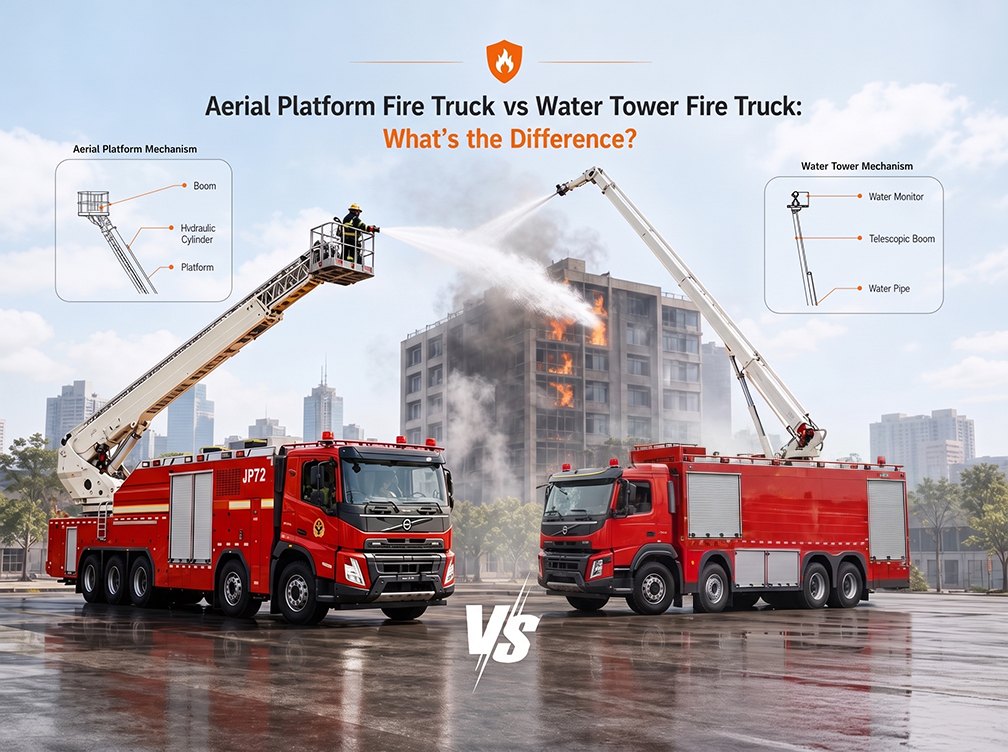
Pagdating sa paglaban sa sunog sa mga mataas na gusali, pasilidad pang-industriya, o malalaking bodega, kailangang-kailangan ang mga trak ng pamatay-sunog na panghimpapawid. Ngunit sa iba't ibang uri ng kagamitang panghimpapawid, dalawa ang madalas na nagdudulot ng kalituhan: angtrak ng pamatay-sunog na may platapormang panghimpapawid at angtrak ng pamatay-sunog na tore ng tubig. Bagama't magkahawig sila sa unang tingin—parehong may mga haydrolikong braso at dinisenyo para sa pagpapatay ng sunog sa matataas na lugar—nagsisilbi sila ng lubhang magkaibang mga misyon. Ipinapaliwanag ng artikulong ito ang mahahalagang pagkakaiba sa pagitan ng dalawang uri ng sasakyang ito, na tumutulong sa mga propesyonal sa serbisyo ng bumbero, mga tagapamahala ng pagkuha, at mga distributor ng kagamitan na gumawa ng mga may-kabatirang desisyon batay sa mga pangangailangang pang-operasyon. I. Ano ang mga Trak na may Platapormang Panghimpapawid? Ayon sa pambansang pamantayang Tsino na GB 7956.12-2015, parehong kabilang ang dalawang sasakyan sa kategorya ngmga sasakyang panlaban sa sunog na panghimpapawid—mga sasakyang nilagyan ng mga nakaaangat na braso, umiikot na mesa, at kagamitang pamuksa ng sunog para sa mga operasyon sa matataas na lugar. Gayunpaman, binibigyang-diin ng kanilang mga tiyak na depinisyon ang isang mahalagang pagkakaiba. Trak ng Pamatay-sunog na may Platapormang Panghimpapawid Ang trak ng pamatay-sunog na may platapormang panghimpapawid ay nilagyan ng natitiklop o kombinasyong natitiklop-teleskopikong braso, plataporma para sa tauhan, umiikot na mesa, at mga kagamitang pamuksa ng sunog . Ang pangunahing katangian ay angplataporma sa paggawa (balde) sa dulo ng braso, kung saan maaaring tumayo ang mga bumbero upang magsagawa ng mga operasyon ng pagsagip at pagpapatay ng sunog. Mga pangunahing katangian:• Nilagyan ng platapormang maaaring magdala ng750 libra hanggang mahigit 1,500 libra na tauhan at kagamitan• Dinisenyo para sa parehongpagsagip at pagpapatay ng sunog—maaaring direktang magpatakbo ang mga bumbero mula sa plataporma• Maaaring gamitin ang plataporma kasama ng mga aparatong kumokontrol sa pagbaba, mga haydrolikong panghila, o mga daluyang pansagip• Mas malawak na abot nang pahalang at mas malaking saklaw ng pagtatrabaho kumpara sa mga tore ng tubig II. Ano ang mga Trak ng Pamatay-sunog na Tore ng Tubig? Ang trak ng pamatay-sunog na tore ng tubig ay nilagyan ng natitiklop o kombinasyong natitiklop-teleskopikong braso, umiikot na mesa, at mga kagamitang pamuksa ng sunog—nang walang plataporma para sa tauhan. Sa halip, isang monitor ng sunog (kanyon ng tubig) ang nakakabit sa dulo ng braso, na maaaring kontrolin nang malayuan mula sa lupa. Mga pangunahing katangian:•Walang plataporma para sa tauhan—nagpapatakbo ang mga bumbero mula sa lupa sa pamamagitan ng remote control• Nakatuon lamang sapagpigil ng sunog sa matataas na lugar, hindi sa pagsagip• Naghahatid ng pambihirang lakas ng daloy ng tubig—lumalampas sa 2,000 galon bawat minutos...
Mga detalye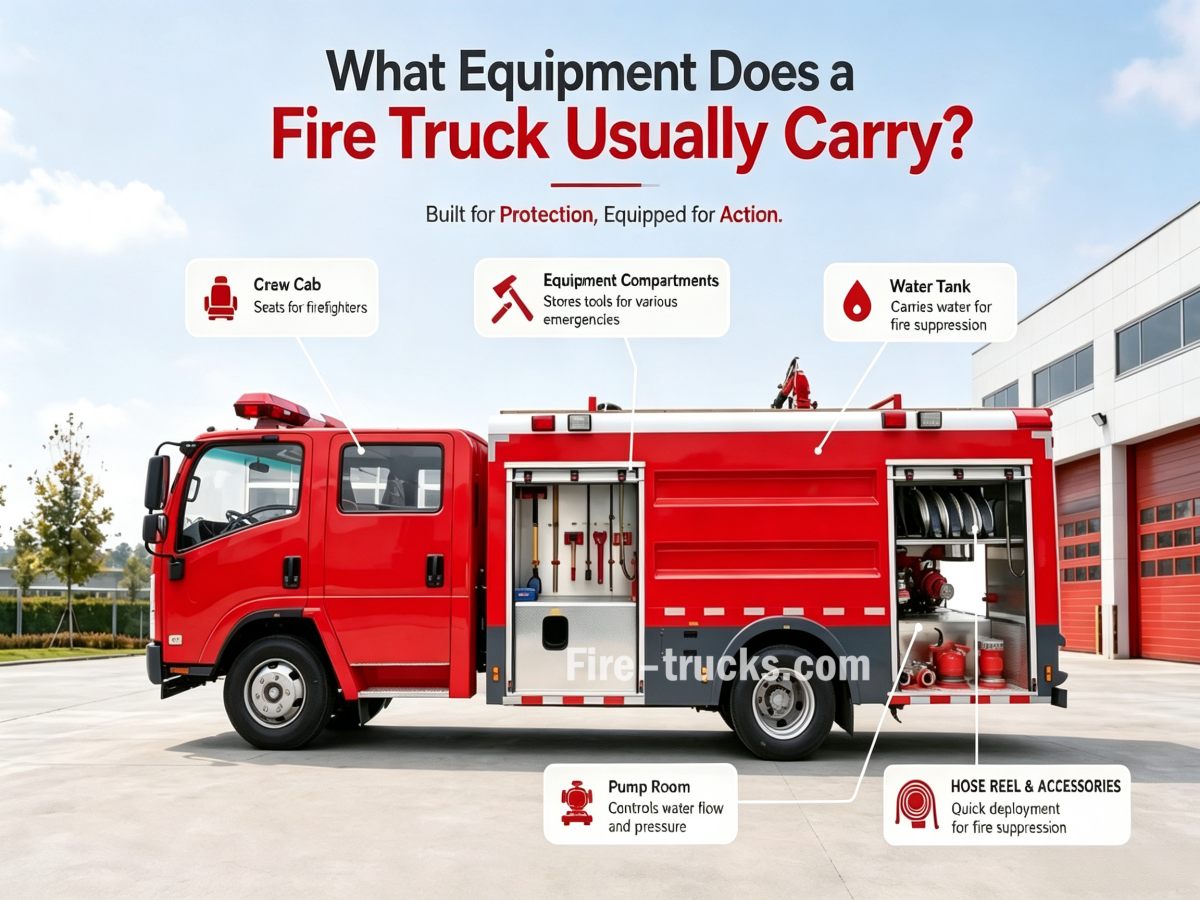
Ang isang trak ng bumbero ay karaniwang nagdadala ng mga kagamitang panlaban sa sunog, suplay ng tubig, pagsagip, at proteksiyong pangkaligtasan. Kasama sa mga karaniwang kagamitan ang mga bomba ng tubig para sa sunog, tangke ng tubig, mga hose ng pamatay-sunog, mga nguso ng buga ng tubig, mga monitor ng sunog, mga balbula, hagdan ng bumbero, mga kasangkapang pangsagip, kagamitang pamproteksiyon, at mga aparatong pangkomunikasyon. Ang artikulong ito ay sistematikong naghihimay ng klasipikasyon, mga gamit, at mga konsiderasyon sa pagpili ng pamantayangkagamitan ng trak ng bumbero , na tumutulong sa mga propesyonal sa pagkuha ng kagamitan at mga end-user na magkaroon ng ganap na pag-unawa sa mga pagsasaayos ng mga aparatong panlaban sa sunog. I. Klasipikasyon ng Kagamitan ng Trak ng Bumbero 1. Kagamitang Panlaban sa Sunog— Mga pangunahing kasangkapan para sa direktang pagpigil ng sunog, kabilang ang mga nguso ng buga ng tubig, monitor ng sunog, hose ng pamatay-sunog, mga pamahagi ng tubig, at mga adaptor. 2. Kagamitang Pagsagip at Pagbubukas ng Harang— Mga kasangkapan para sa paggawa ng mga daanan para sa mga operasyon ng pagsagip at paglaban sa sunog, kabilang ang mga haydrolikong kasangkapan sa pagsagip, palakol ng bumbero, pambukas na pingga, bareta, lagaring pangputol, at lagaring de-kadena. 3. Kagamitang Pagsagip at Pagpapanatili ng Buhay— Mga kagamitan para sa paghahanap, paglilipat, at proteksiyon ng mga tauhan, kabilang ang mga stretcher, lubid pangsagip, kawit pangkaligtasan, mga aparatong kumokontrol sa pagbaba, pansariling kagamitang panghinga (SCBA), at mga ekstrang silindro ng hangin. 4. Kagamitang Pang-alis ng Usok at Ilaw— Mga kagamitan para mapabuti ang mga kondisyon sa lugar ng sunog, kabilang ang mga pangbuga ng usok, mga mobile na tore ng ilaw, at mga portable na searchlight na may mataas na intensidad. 5. Personal na Kagamitang Pamproteksiyon (PPE)— Mga gamit para protektahan ang kaligtasan ng mga bumbero, kabilang ang mga helmet, damit na pamproteksiyon para sa istrukturang pamatay-sunog, guwantes, bota, at sinturong pangkaligtasan. 6. Kagamitang Pangkomunikasyon at Rekonosisansiya— Mga kagamitan para sa pangangalap ng impormasyon sa lugar ng sunog at koordinasyon ng pamumuno, kabilang ang mga two-way radio, thermal imaging camera, at mga detektor ng nakalalasong gas. II. Kagamitang Panlaban sa Sunog sa mga Trak ng Bumbero 1. Bomba ng Tubig para sa Sunog Ang bomba ng tubig para sa sunog ang pinagmumulan ng kapangyarihan para sa lahat ng operasyon ng paglaban sa sunog. Mekanikal nitong pinapataas ang presyon ng tubig, na nagbibigay rito ng sapat na enerhiyang kinetiko upang makumpleto ang buong proseso ng "pagkuha ng tubig → pagpapataas ng presyon → paghahatid → pagpapalabas." Karaniwang mga espesipikasyon ng bomba ng tubig para sa sunog: •Karaniwang Presyur na Bomba ng Tubig para sa Sunog (uri ng CB10/30):Daloy na ≥30L/s, nakatakdang presyon na 1.0MPa, pagkakabit sa likurang bahagi. Angkop para sa mga karaniwang trak ng tangke ...
Mga detalye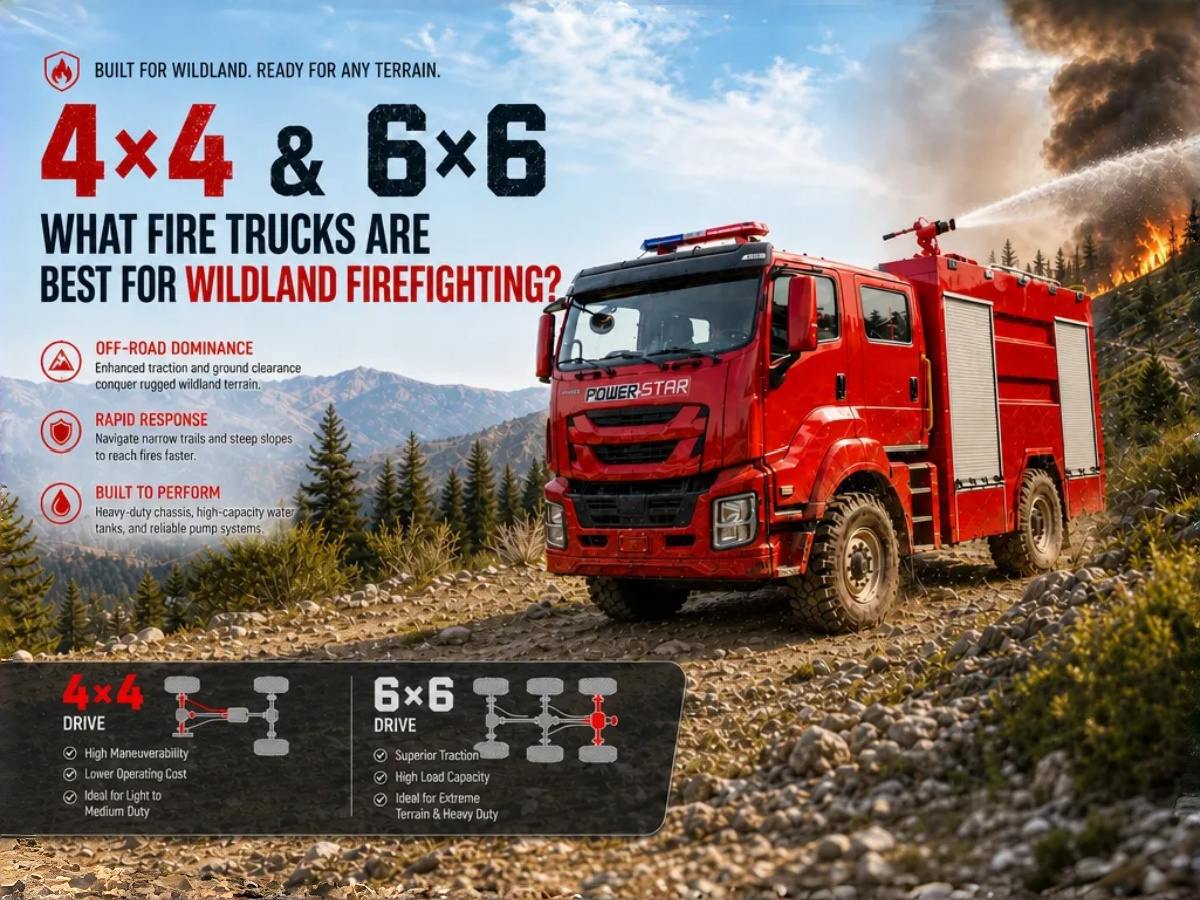
Ang paglaban sa mga sunog sa kagubatan at kaparangan ay may mga hamong pangunahing naiiba sa paglaban sa mga sunog sa gusali. Sa malalayong kagubatan, damuhan, at bulubunduking lupain, kailangang dumaan ang mga trak ng bumbero sa makikitid na daan, umakyat sa matatarik na dalisdis, at gumana nang malayo sa mga hydrant o pinagkukunan ng tubig. Ang pagpili ng tamang trak panlaban sa sunog ay isang estratehikong desisyon na direktang nakaaapekto sa oras ng pagtugon, kaligtasan ng mga tauhan, at pagiging epektibo ng pagsugpo sa sunog. Nagbibigay ang artikulong ito ng komprehensibong pagsusuri ng mga pinakaangkop na uri ng trak ng bumbero para sa paglaban sa mga sunog sa kagubatan at kaparangan, ang kanilang mahahalagang katangian, at mga paraan ng pagpili, upang matulungan kang gumawa ng tamang desisyon batay sa iyong partikular na pangangailangan sa operasyon. Mabilis na Sagot Ang mga sunog sa kagubatan at kaparangan ay nailalarawan sa malalawak na lugar ng sunog, masalimuot na lupain, limitadong pinagkukunan ng tubig, at mahihirap na kondisyon ng daan, kaya walang iisang trak ng bumbero na kayang humawak sa lahat ng sitwasyon ng sunog sa kagubatan. Sa pangkalahatan, pangunahing ginagamit sa paglaban sa mga sunog sa kagubatan at kaparangan ang mga sumusunod na uri ng trak ng bumbero: • Mga magagaan na trak panlaban sa sunog sa kagubatan at kaparangan: para sa pagdaan sa mga daan sa kagubatan at mabilis na pagtugon• Mga 4×4 na trak panlaban sa sunog sa kagubatan at kaparangan: para sa bulubundukin at maburol na lupain• Mga 6×6 na trak panlaban sa sunog sa kagubatan at kaparangan: para sa malalawak na sunog sa kagubatan at matagalang operasyon• Mga tangker ng tubig: para sa tuloy-tuloy na suplay ng tubig at suporta• Mga trak panlaban sa sunog na gumagamit ng bula: para sa mga pasilidad ng langis, kagamitang pangkagubatan, o espesyal na uri ng sunog• Mga sasakyang pangresponde: para sa komunikasyon, pag-iilaw, pagbubukas ng daan, at suporta sa logistika I. Bakit Nangangailangan ang mga Sunog sa Kagubatan at Kaparangan ng Espesyal na Trak ng Bumbero? Pangunahing naiiba ang mga sunog sa kagubatan at kaparangan sa mga sunog sa gusali sa ilang mahahalagang paraan: Mahahalagang katangian ng mga sunog sa kagubatan at kaparangan:• Malalawak na lugar ng sunog na umaabot sa ektarya ng lupain• Mabilis na nagbabagong direksiyon ng hangin• Masalimuot at mabatong lupain• Limitado o walang akses sa mga hydrant o pinagkukunan ng tubig• Makikitid at hindi sementadong mga daan sa kagubatan• Mahihirap na kondisyon sa komunikasyon Karaniwang hindi angkop ang mga karaniwang trak ng bumbero sa lungsod para sa paglaban sa mga sunog sa kagubatan at kaparangan dahil sa mga sumusunod na dahilan: • Kulang sa 4×4 o lahat-ng-gulong na sistema para sa hindi sementadong mga daang bundok at matatarik na dalisdis;• Ang mas malaking sukat at mababang layo sa lupa ay nagiging dahilan upang madali silang maipit sa makikitid na daan sa kagubatan at malambot na lupain;• Ang mga bomba sa l...
Mga detalye
Sa mga operasyon ng pag-apula ng sunog, ang pagpili ng paraan ng pagbuga ay direktang nakaaapekto sa kahusayan ng pag-apula ng apoy, kaligtasan sa operasyon, at pagiging epektibo ng pagkontrol sa sunog. Hindi alam ng karamihan na ang trak ng bumberomga nozzle ay maaaring lumipat sa tatlong pangunahing paraan ng pagbuga: tuwid na agos, spray na agos, at proteksiyong agos. Malaki ang pagkakaiba ng bawat paraan sa anyo ng daloy, saklaw ng abot, puwersa ng tama, at lawak ng saklaw, at bawat isa ay tumutugma sa ganap na magkakaibang sitwasyon ng sunog. Ang artikulong ito, batay sa mga pamantayan ng propesyonal na operasyon sa pag-apula ng sunog, ay komprehensibong sinusuri ang mga prinsipyo, pangunahing katangian, at naaangkop na mga sitwasyon ng tatlong paraan ng pagbuga, upang matulungan ang aming mga customer na sistematikong mahasa ang mga teknik sa pagbuga ng trak ng bumbero. I. Bakit Kailangan ng mga Trak ng Bumbero ng Iba't Ibang Paraan ng Pagbuga? Ang tuwid na agos, spray na agos, at proteksiyong agos ay tumutugma sa tatlong magkaibang mekanismo ng pag-apula ng sunog: pag-apula sa pamamagitan ng puwersa ng tama, pagsakal sa pamamagitan ng singaw, at proteksiyon laban sa thermal radiation. Kailangang flexible na magpalit ang mga bumbero ayon sa kondisyon ng lugar. Kaya, bakit hindi na lang gumamit palagi ng isang uri ng agos? 1. Ang pagkakaiba-iba ng uri ng sunog ay nangangailangan ng iba't ibang anyo ng medium na pang-apula Ang iba't ibang uri ng sunog ay may magkakaibang katangian ng pagkasunog, na tumutukoy sa angkop na paraan ng pag-apula: • Ang mga sunog ng Class A na solidong materyal ay nangangailangan ng tama ng tuwid na agos upang durugin ang nasusunog na materyales at mapasok ang loob para sa pagpapalamig; • Ang mga sunog ng Class B na likido ay hindi maaaring gumamit ng tama ng tuwid na agos (dahil nagdudulot ito ng pagsabog ng likido at pagkalat ng apoy), kundi dapat gumamit ng proteksiyong agos o spray na agos para sa pagtakip at pagpapalabnaw; • Ang mga sunog ng Class E na may kuryente ay maaari lamang gumamit ng spray na agos, dahil ang maliliit na patak ng tubig ay hindi bumubuo ng tuloy-tuloy na daanan ng kuryente; • Ang mga sunog sa saradong espasyo ay nangangailangan ng spray na agos upang mapuno ang buong lugar, na nakakamit ang pag-apula sa pamamagitan ng pagsipsip ng init sa pagsingaw at pagsakal. Walang iisang paraan ang maaaring umangkop sa lahat ng uri ng sunog. 2. Ang iba't ibang yugto ng parehong sunog ay nangangailangan ng iba't ibang taktikal na paraan Kahit sa parehong sunog, ang iba't ibang yugto ay nangangailangan ng iba't ibang paraan ng pagbuga: • Sa unang yugto kapag matindi ang apoy, kailangan ang tuwid na agos para sa pangmatagalang tama sa pinagmumulan ng apoy upang mabilis itong mapigil; • Habang sumusulong, kailangan ang proteksiyong agos upang bumuo ng harang na kurtina ng tubig na humaharang sa thermal radiation at nagpoprotekta sa mga tauhan; • Bago pumasok sa isang silid, kailangan ang spray na agos u...
Mga detalye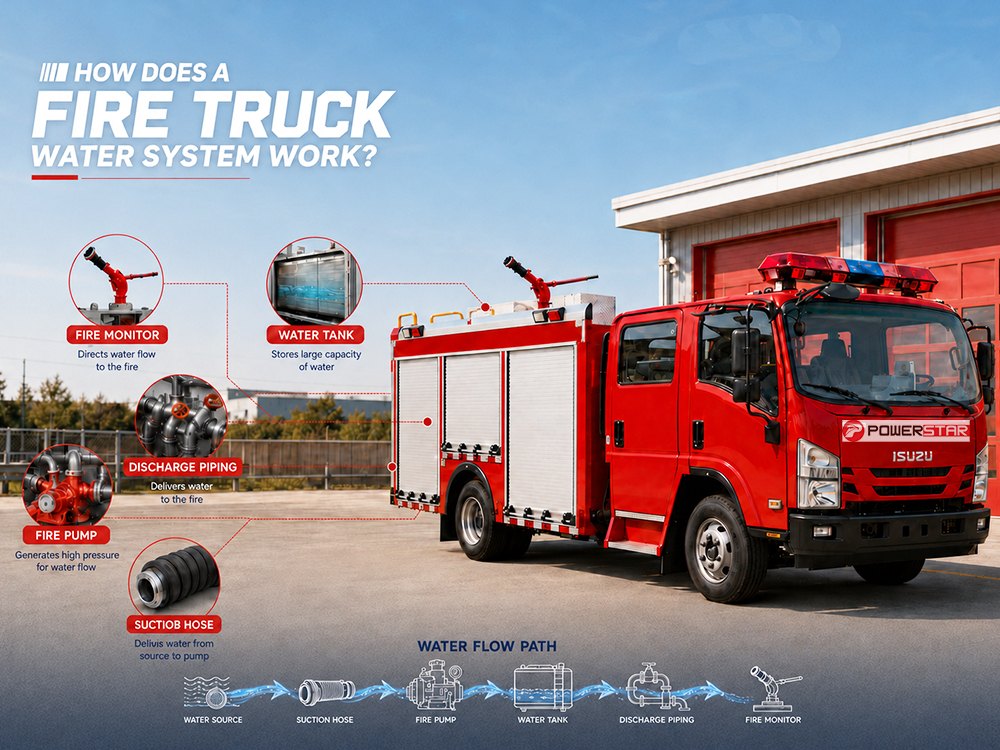
Ang sistema ng tubo ng tubig ng trak-pamatay-sunog ay ang pangunahing bahagi ng bawat operasyon sa paglaban sa sunog. Tumpak nitong dinidirekta ang tubig mula sa tangke o panlabas na pinagmumulan sa pamamagitan ng bomba, mga balbula, at mga tubo upang maghatid ng mataas na presyur na tubig o bula sa lugar ng sunog — maging ito man ay sunog sa mataas na gusali sa siksik na sentro ng lungsod o sunog sa tangke ng imbakan ng petrochemical sa sonang industriyal. Ang trak-pamatay-sunog sistema ng tubo ng tubig ay binubuo ng maraming bahaging nagtutulungan: bomba ng tubig-panlaban sa sunog, tangke ng tubig, hose ng pagsipsip, mga tubo ng paglabas, mga balbula, sangang pamamahagi, sangang pangkolekta, salaan, monitor ng sunog, mga pangkabit ng hose, at iba pa. Ang kumpletong daloy ay: Tangke ng Tubig → Hose ng Pagsipsip → Salaan → Bomba ng Sunog → Sistema ng Regulasyon ng Presyon → Kolektor ng Paglabas → Mga Balbula → Sanggang Pamamahagi → Monitor ng Sunog / Mga Pangakabit ng Hose → Buga Ipinapaliwanag ng artikulong ito ang bawat bahagi ng sistema ng tubo ng tubig at kung paano sila nagtutulungan upang maghatid ng tubig sa tamang presyon at daloy. I. Mga Pangunahing Bahagi ng Sistema ng Tubo ng Tubig Tangke ng Tubig Nag-iimbak ng suplay ng tubig na nasa sasakyan. ● Kapasidad: Karaniwang 2,000–12,000 litro. ● Paghahatid: Nagpapakain ng tubig sa bomba sa pamamagitan ng mga tubo ng pasok. ● Mga Tampok: Mga hadlang laban sa pag-alog ng tubig para sa katatagan ng sasakyan, salaan upang magsala ng mga dumi, at sistema ng pagpauna ng sipsip para kumuha ng tubig mula sa likas na pinagmumulan. Bomba ng Sunog Isang centrifugal na bomba na pinapaandar ng makina ng trak sa pamamagitan ng PTO; maaaring iisang yugto/maraming yugto, gawa sa cast iron o tanso. ● Mga antas ng presyon: Magagamit sa karaniwang rating na 0.8 MPa, 1.0 MPa, 1.2 MPa, at 1.4 MPa, na tumutugma sa karaniwang pangangailangan sa paglaban sa sunog. ● Mga antas ng daloy: Umaabot mula 1,200 hanggang 6,000 L/min, na may mga kurba ng pagganap na iniangkop para sa parehong operasyon na mataas ang presyon at mataas ang dami. Mga Balbula at Tubo Isang network ng mga tubo at balbula na kumokontrol sa direksiyon at dami ng daloy ng tubig. ● Balbula ng pasok: Ikinokonekta ang bomba sa mga panlabas na pinagmumulan ng tubig (hydrant o punto ng pagsipsip) ● Balbula mula tangke patungo sa bomba: Pinahihintulutan ang bomba na kumuha ng tubig nang direkta mula sa tangke ng sasakyan ● Mga balbula ng paglabas: Kinokontrol ang daloy ng tubig papunta sa mga hose at nozzle II. Paano Gumagana ang Sistema ng Tubo ng Tubig ng Trak-Pamatay-Sunog Hakbang 1: Pagpasok ng Tubig at Pagpapauna ng Sipsip Pumapasok ang tubig sa sistema mula sa tangke ng sasakyan, hydrant ng sunog, o likas na pinagmumulan ng tubig (mga lawa, ilog, lawa). Kapag kumukuha mula sa likas na pinagmumulan, inaalis ng sistema ng pagpapauna ng sipsip (vacuum pump) ang hangin mula sa hose ng pagsipsip, lumilikha ng vacuum na nagpapahintulot sa presyon ng atm...
Mga detalye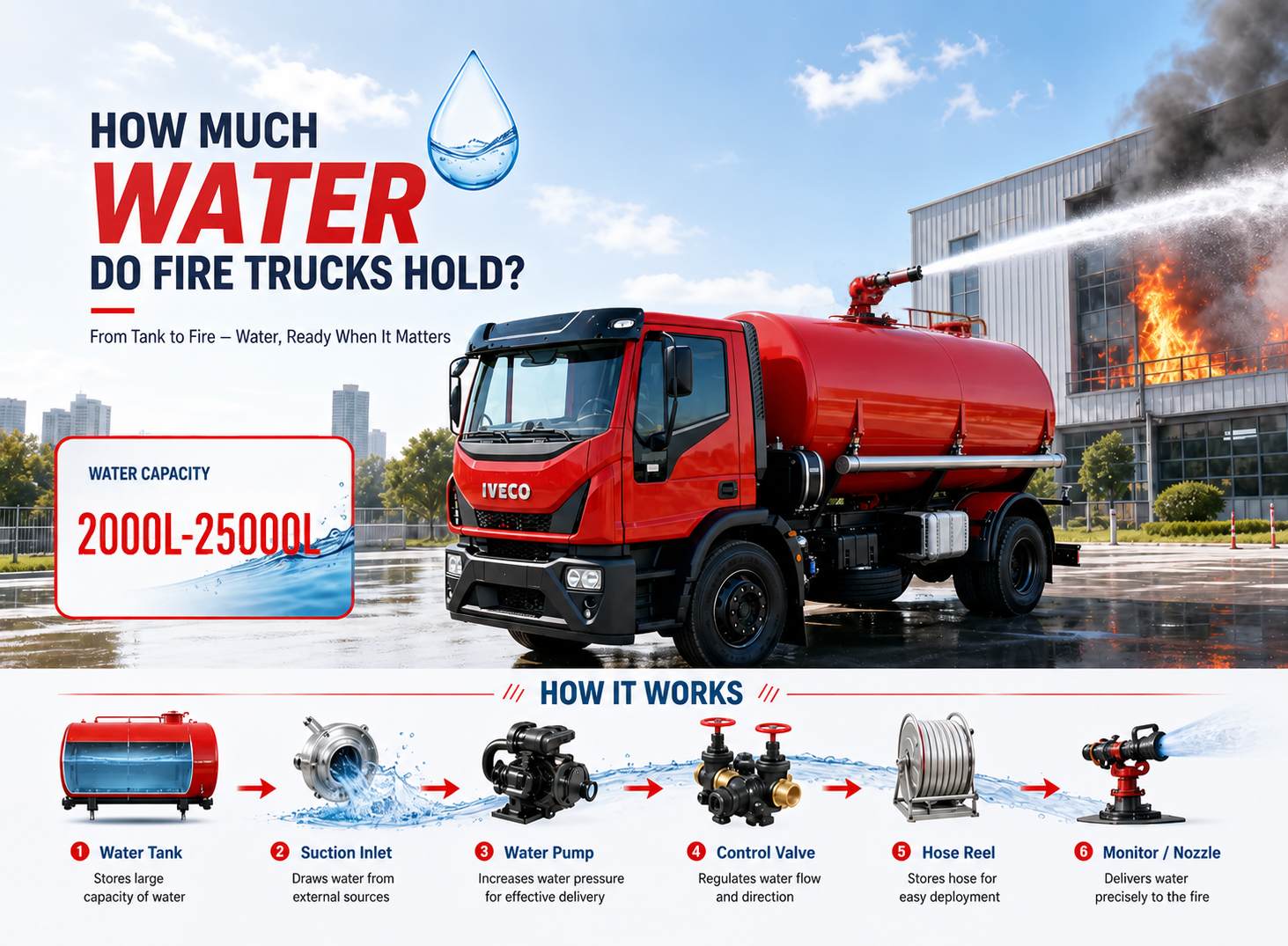
Gaano karaming tubig ang kayang dalhin ng isang trak ng bumbero? Isa ito sa mga unang tanong na kinakaharap ng aming mga customer kapag pumipili ng trak ng bumbero. Walang iisang nakapirming bilang — nakadepende ito sa uri ng sasakyan, kapasidad ng chassis, layunin ng disenyo, at mga regulasyon sa rehiyon, mula sa 2,000 litro na mga yunit na magaan ang gamit hanggang sa 25,000 litro na mga trak ng bumbero para sa industriya. Ngunit ang mas malaking tangke ay hindi palaging nangangahulugan ng mas mahusay na pagganap; sasakyang panlaban sa sunog ang kapasidad ng tangke ng tubig ay dapat na wastong itugma sa daloy ng bomba, bilis ng paglabas ng monitor, at kapasidad ng chassis upang makapaghatid ng epektibong resulta sa paglaban sa sunog. Nagsisimula ang artikulong ito sa mga pangunahing kaalaman tungkol sa kapasidad ng tangke ng tubig ng trak ng bumbero, sinusuri ang karaniwang mga saklaw ng imbakan para sa iba't ibang uri ng sasakyan, tinatalakay ang mahahalagang salik na nakaaapekto sa disenyo ng tangke, at nagbibigay ng praktikal na gabay sa pagbili. Mahahalagang Punto: Ang kapasidad ng tangke ng tubig ng trak ng bumbero ay karaniwang nasa saklaw na 2,000 hanggang 25,000 litro Magkakaiba ang kapasidad ng tangke ng iba't ibang uri ng trak ng bumbero Ang mas malaking tangke ay hindi nangangahulugan ng mas mahusay na kakayahan sa paglaban sa sunog Ang kapasidad ng tangke ay dapat itugma sa daloy ng bomba, daloy ng monitor, at kapasidad ng chassis Karaniwang nangangailangan ang paglaban sa sunog sa industriya ng malalaking tangke, habang inuuna ng paglaban sa sunog ng mga munisipalidad ang madaling pagkilos » I. Tatlong Pangunahing Uri ng Tangke ng Tubig ng Trak ng Bumbero Mga Trak na may Bomba:Ito ang pinakakaraniwang mga trak ng bumbero ng munisipalidad. Pangunahing umaasa ang mga ito sa mga fire hydrant para sa suplay ng tubig at nagdadala ng humigit-kumulang 1,900–3,800 litro ng tubig sa sasakyan para sa paunang pag-atake. Ang pangunahing bahagi ng mga sasakyang ito ay ang bomba, hindi ang tangke — dinisenyo ang mga ito upang maghatid ng may presyong tubig kapag nakakonekta na sa fire hydrant. Mga Tangker na Trak (Mga Tagapagdala ng Tubig):Ang mga sasakyang ito ay nakalaan sa pagdadala ng malalaking dami ng tubig, na may kapasidad ng tangke na karaniwang lampas sa 11,400 litro. Mahalaga ang papel nila sa mga rural at liblib na lugar kung saan walang mga fire hydrant, dahil naghahatid sila ng tubig mula sa mga pinagmumulan ng tubig patungo sa lugar ng sunog para gamitin ng mga trak na may bomba. Mga Trak na may Bomba at Tangke:Pinagsasama ng mga sasakyang ito ang mga tungkulin ng pagbomba at pagdadala ng tubig sa isang yunit. Maaari silang parehong maglabas ng tubig para sa paglaban sa sunog at magsuplay sa ibang mga sasakyan. Karaniwang nasa 5,700 hanggang 11,400 litro ang kapasidad ng tangke, kaya maraming gamit ang mga ito para sa mga kagawaran ng bumbero. » II. Gaano Karaming Tubig ang Kayang Dalhin ng Iba't Ibang Uri ng Trak ng Bumbero? Uri ...
Mga detalye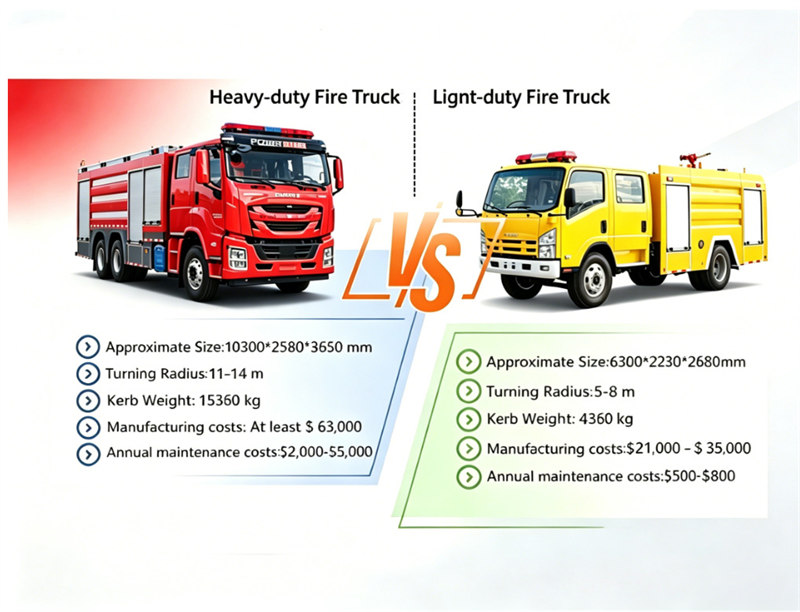
Trak ng pamatay-sunog para sa pagsagipmalaki ang pagkakaiba ng mga pangangailangan sa pagitan ng mga metropolitan na lugar at mga komunidad sa kanayunan o maliliit na bayan. Umaasa ang malalaking kagawaran ng bumbero sa mga mabibigat na trak ng pamatay-sunog na may malalaking tangke ng tubig, mahahabang hagdan para sa matataas na gusali, at kumpletong pang-industriyang konfigurasyon upang harapin ang mga sunog sa matataas na gusali, sunog sa industriya, at malalaking emerhensiya. Gayunpaman, para sa maliliit na lungsod, mga bayan sa kanayunan, mga istasyon ng bumbero sa nayon, at mga boluntaryong kagawaran ng bumbero, ang mabibigat na trak ng pamatay-sunog ay kadalasang nagiging pasanin kaysa kalamangan. Ito ang dahilan kung bakit naging pangunahing at pinakapraktikal na solusyon sa buong mundo ang magagaan na trak ng pamatay-sunog para sa maliliit na lungsod at mga kagawaran ng bumbero sa kanayunan. Sa pagsasama ng maliit na sukat, nababagong paggalaw, kumpletong pangunahing mga tungkulin sa pagsagip, at mababang kabuuang gastos, perpektong tumutugma ang mga ito sa pang-araw-araw na pangangailangan sa pagsagip at pag-iwas sa sunog ng mga pangunahing pangkat ng bumbero. Ang magaan na trak ng pamatay-sunog ay isang maliit at magaang sasakyang pang-emerhensiya para sa sunog na partikular na idinisenyo para sa mga senaryo ng sunog sa mga pangunahing komunidad, suburban na lugar, at kanayunan. I. Paghahambing sa pagitan ng mabibigat at magagaan na trak ng pamatay-sunog: Upang malinaw na tingnanang agwat sa pagitan ng mabibigat at magagaan na trak ng pamatay-sunog, naghanda kami ng direktang tsart ng paghahambing na sumasaklaw sa mga pangunahing praktikal na sukatan. Ang malalaking modelo ay umaabot sa mahigit 10 metro na may radius ng pagliko na 11–14m at bigat na 15 tonelada, na nagkakahalaga ng hindi bababa sa $63,000 para gawin kasama ang $2,000–$5,000 taunang pagpapanatili. Sa kabilang banda, halos hinahati ng mga compact na magagaan na trak ng pamatay-sunog ang sukat, tumitimbang lamang ng 4,360 kg, nagsisimula sa $21,000, at nagpapanatili ng taunang gastos sa pagpapanatili na mababa sa $800, na nagbibigay ng mas mahusay na paggalaw at halaga sa badyet para sa mga istasyon sa kanayunan at maliliit na bayan. Ⅱ.Mga pangunahing tampok ng magagaan na trak ng pamatay-sunog: 1.Magaan ngunit may disenyong may mataas na kakayahang magdala ng karga. Ang kabuuang bigat ng sasakyan ay nananatiling mas mababa sa 8,000 kg kahit ganap na puno, na nagbibigay-daan sa napakabilis na pagtugon sa emerhensiya. 2.Maaaring piliin ang pagpapasadya ng all-wheel drive upang harapin ang magaspang at hindi pantay na mga daan na karaniwan sa malalayong rehiyon. 3.Ganap na napapanatili ang buong saklaw ng mga kakayahan sa paglaban sa sunog: a. Dalawang magkahiwalay na tangke para sa tubig at foam na panlaban sa sunog. b. Double-row na kabina para sa mga tauhan upang mapaunlakan ang buong pangkat ng mga tumutugong bumbero. c. Kumpletong karaniwang imbentary...
Mga detalye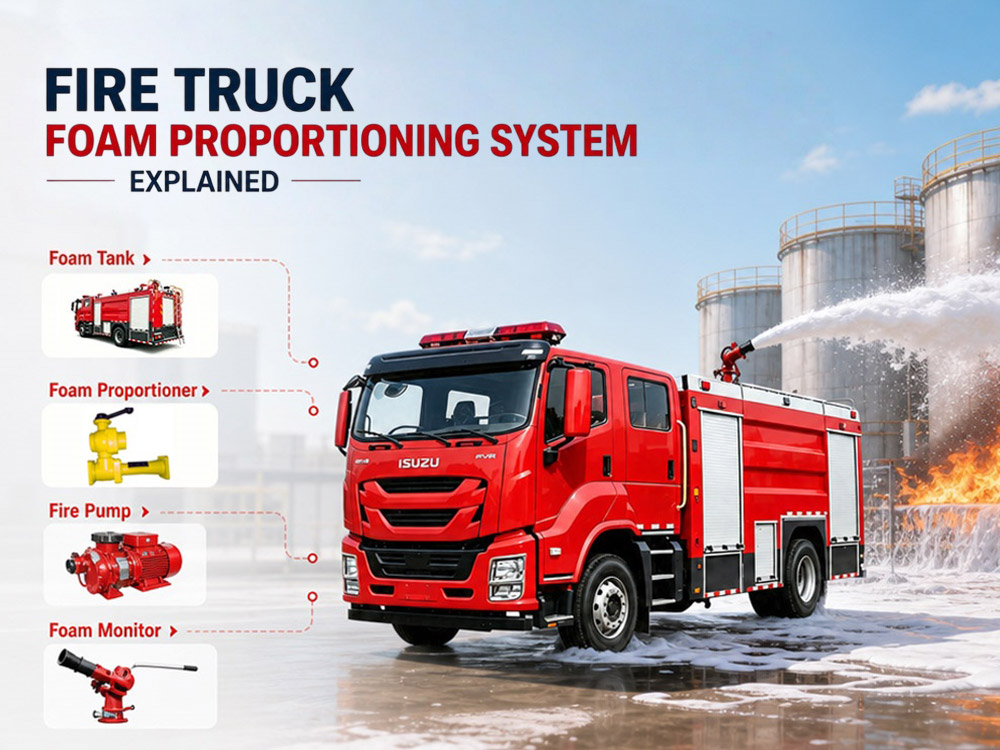
Hinahalo ng sistema ng bula ng trak ng bumbero ang tubig at pampalapot ng bula sa eksaktong mga proporsyon (1%, 3%, o 6%) upang makagawa ng solusyon ng bula. Ang solusyong ito ay saka pinipresyur ng bomba ng bumbero at pinalalaki gamit ang hangin sa pamamagitan ng mga nguso ng bula — ito ang pangunahing prinsipyo ng paggana kung paano isang trak ng bumbero na may bula naghahalo ng bula at tubig — na sa huli ay lumilikha ng matatag na kumot ng bula na tumatakip sa ibabaw ng gasolina. Pinapataas ng prosesong ito ang kahusayan sa paglaban sa sunog nang mahigit 50% habang binabawasan ang aksaya ng pampalapot ng bula ng 30%. » I. Bakit Kailangan ng Sistema ng Bula ang Isang Trak ng Bumbero? Kung ihahambing sa paggamit lamang ng tubig, may tatlong pangunahing pakinabang ang bula: 1. Paghiwalay ng Oxygen— Tinatakpan ng bula ang nasusunog na ibabaw, na bumubuo ng siksik na pisikal na hadlang na pumipigil sa pag-abot ng oxygen sa sona ng pagkasunog, kaya napipigil ang apoy. 2. Pagbawas ng Temperatura— Ang nilalamang tubig sa solusyon ng bula ay sumisipsip ng malaking dami ng init habang sumisingaw ito, kaya mabilis na nababawasan ang temperatura ng nasusunog na lugar. 3. Pag-iwas sa Muling Pagkasiklab— Patuloy na tinatakpan ng patong ng bula ang lugar ng apoy kahit matapos mapatay ang apoy, na epektibong naghihiwalay sa oxygen at mga nasusunog na singaw, at lubos na binabawasan ang panganib ng muling pagkakasiklab. » II. Pangunahing Prinsipyo ng Paggana ng Sistema ng Bula 1. Sistema ng Paghahalo ng Proporsyon:Dumadaloy ang tubig sa proportioner → lumilikha ng negatibong presyon (sistemang negatibong presyon) o gumagamit ng bomba ng bula (sistemang positibong presyon) → kumukuha ng pampalapot ng bula mula sa tangke ng bula → naghahalo sa itinakdang proporsyon (1%, 3%, o 6%) → dumadaloy ang solusyon ng bula papunta sa bomba. 2. Pagpapapresyur ng Bomba:Pumapasok ang solusyon ng bula sa centrifugal na bomba → pinipresyur hanggang 0.8–1.2 MPa → ipinapadala sa pamamagitan ng mga tubo patungo sa mga labasan o monitor ng bula. 3. Pagpapalawak ng Bula:Ang solusyon ng bula na may presyon ay dumadaan sa nguso ng bula o aparatong nagpapahangin → nahahalo ang hangin → lumalawak ang solusyon bilang nabuo nang bula → tinatakpan ang ibabaw ng gasolina → pinuputol ang suplay ng oxygen at pinipigil ang apoy. Pangunahing Konsepto:Ang pampalapot ng bula + tubig ay hindi katumbas ng nabuo nang bula. Ang pinaghalong solusyon ng bula ay likido pa rin — kailangan itong pagsamahin sa hangin sa pamamagitan ng nguso ng bula upang maging tunay na bula para sa paglaban sa sunog. Kapag ang mataas na presyur na solusyon ng bula ay dumaan sa nguso nang mabilis, lumilikha ito ng lokal na sona ng negatibong presyon na sapilitang humihigop ng hangin. Ang hangin at likido ay nagbabanggaan at marahas na naghihiwa-hiwalay sa loob ng nguso, na agad na nagiging milyun-milyong maliliit na bula na naiipon upang bumuo ng puting bula. » III. Paano Naghahalo ng Bula at Tubig ang Isang Trak ng Bumber...
Mga detalye
Mangyaring magpatuloy sa pagbabasa, manatiling nakaantabay, mag-subscribe, at malugod naming hinihintay ang inyong mga komento.

 Suportado ang network ng IPv6

 Filipino
 English
 français
 Deutsch
 русский
 italiano
 español
 português
 Nederlands
 العربية
 日本語
日本語 한국의
한국의 Türkçe
 Melayu
 ไทย
ไทย Tiếng Việt
 Indonesia
  中文
中文 қазақ
қазақ မြန်မာ
 српски